Showing posts with label lesson. Show all posts

Tuesday, 28 January 2025

Making Numberblocks

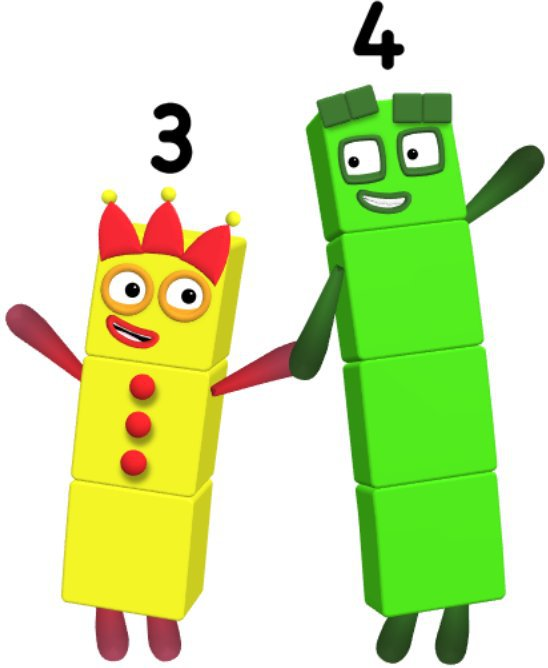
We have two students in our pre-K classes, Y in Star Class and G in Moon Class, both five years old now, who are fanatical about fairly large Numberblocks numbers. "I love rectangles!" G exclaimed the other day!

I've blogged about this series before and I - along with all our students - think it's brilliant! There's a page I go to to access all the episodes. As my students are between three and five years old, we're leaning towards the small numbers.

At the start of the year G's parents told me he really loved the series, and moreover, knew the square numbers and 'Step Squad' numbers (Numberblocks-speak for triangle numbers). I waited, but he didn't seem to be showing it much in class. It was really in December that he discovered a fellow enthusiast in Y, that he started to talk about it.

Most of what happens in Star and Moon classes is voluntary - the students choose which play they engage in. We adults put out things that we think will interest and engage them, and we also have a couple of 'meetings' a day with our classes, but for most of the day the students choose from what's provided.

We've noticed that influence is a really important factor in what the students try out, and what they persist in. I wrote a blog post about this - 'Copycats'. So it's to be expected that it would be social factors that would really bring the enthusiasm out into the open.

At first they were asking to see pictures of Numberblocks numbers on the Internet. Then they were making them with Multilink cubes.

On the 19th December, G made these:

That's 24, seen as two twelves, 18, seen as two nines, and 27, seen as three nines.

On the same day, Y was telling Estelle a story to write down, all about Numberblocks.


And also putting together 30, 40 and 48:


These are regular Numberblocks colours. 30 is yellow because 3 is yellow, 40 is green because four is green. And eight is pink.
There followed a flurry of number-building, which continued in the new year.
We allowed them to display their creations.
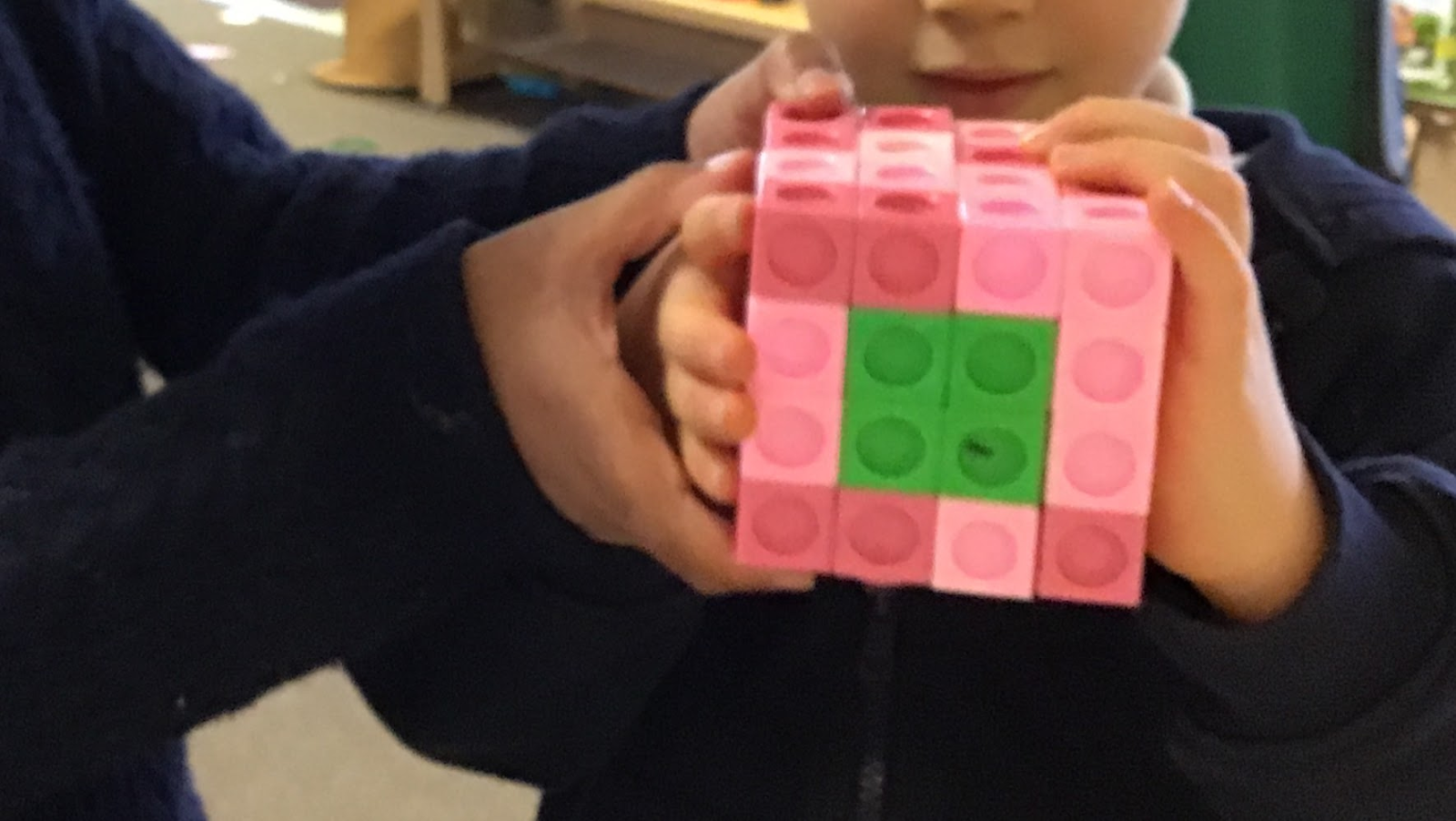
There's always a mathematical structure in these. For instance, here's 64 as a cube:
There's the sixty, which should be purple really, but we don't have many purple cubes, and the four, which is green.

A new kind of story began:

We act out lots of our stories - and this one was a challenge - but we did it! A whole series of similar 'times table' stories followed from both students.

A concern though. These students are outliers. Would there be any way for the 'copycat' thing to happen? These two were so deep into their number inquiry - would there be a way for the others to access what they were doing? I was giving a lot of time to them- a pleasure for me - but I wanted to be giving that time to more students.
Luckily - the answer seems to be... yes.

W, who is only telling brief stories, told me this:
Ar., one of our three-year olds, told me this one:

G and Y were pressing on... with 125, as a cube. You can see it's structure here:
and 49, as a square:

One way to spread the goodness was to put out the Unifix cube stairs. They seem to always get filled with the Numberblocks colours.

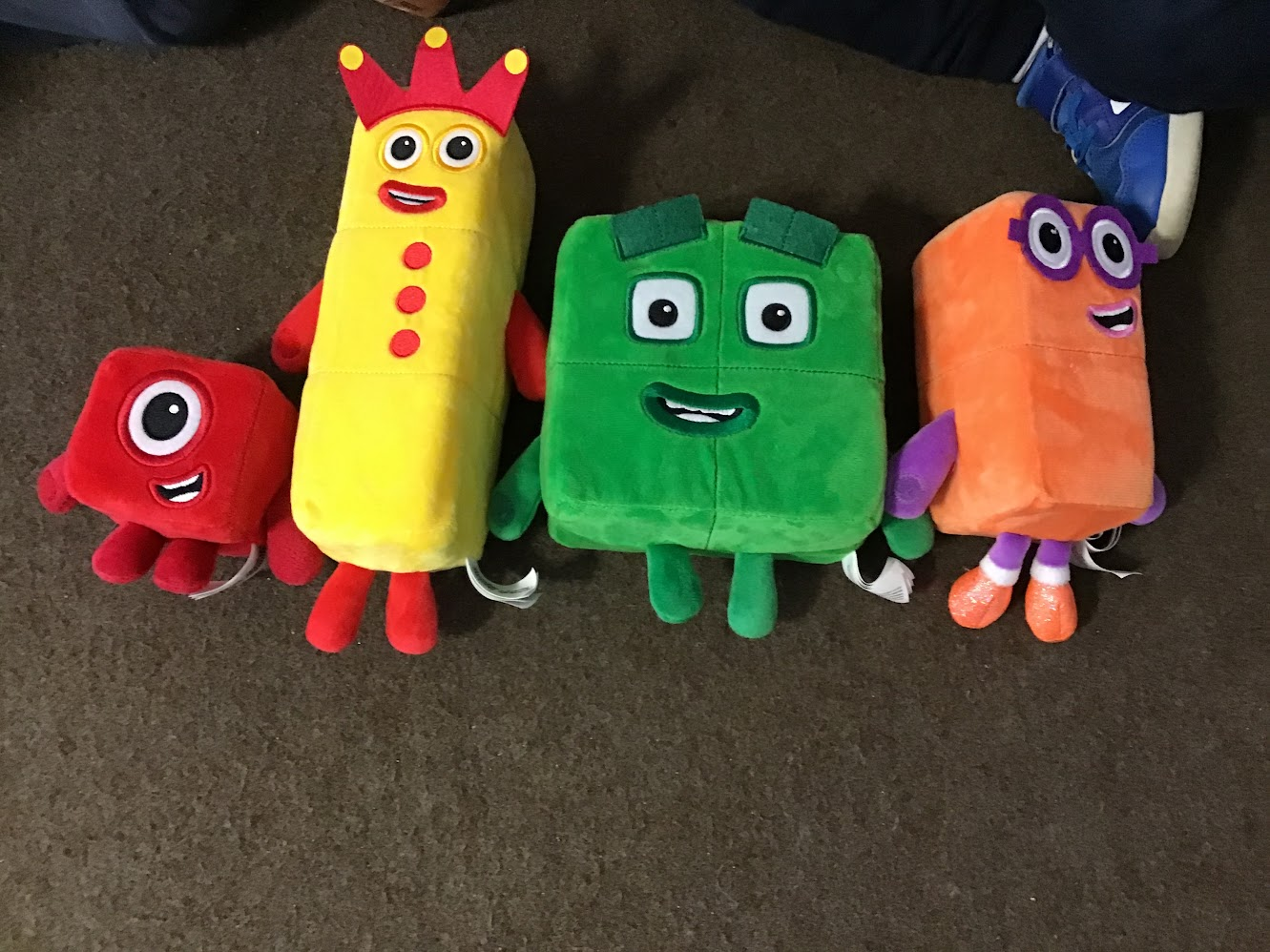
Our furry versions help too!

Then we hit gold. I put out squared paper and black pens. Somehow it was a lot easier to draw them than make them.

Al. drew this one:

Students were enjoying just drawing the grids - five or six new ones joined in, some of them just enjoying reproducing the grid:
An. wrote this story:

We scanned the drawings and let the students colour in digitally. And now there seems to be momentum building, with lots of them engaging in some way. 


W. drew this one - I helped him start off as he's done hardly any drawing this year:
An. did these:
K was very pleased with this. Though he needed me to tell him the size of the rectangles, it was G and Y who advised on the colouring:

I'm excited about the contagion and I'm hopeful that we'll find more ways to build bridges to allow the student-to-student influence that happens in our classes to do its thing.

I'll keep you posted.

Sunday, 24 November 2024

things counter, original, spare, strange

As an IB school, "inquiring" is pretty much the first word that comes up as a statement of principles. But somehow, in mathematics especially, it doesn't usually end up in first place.

It's that old thing of teachers feeling they need to cover the material (in our case it's called the 'scope and sequence') and not knowing that inquiry will go much deeper and in fact cover more.

Teachers do of course ask students to discuss things before moving on, activating prior knowledge, sharing vocabulary, and bringing learnt-but-a-little-forgotten concepts back to the front of the mind.

But this time of discussion can also be one of the best places to find the starting points for student-initiated inquiry.

I was visiting a Grade 3 class (Year 4 in terms of the English system) a few weeks ago. The teacher was getting the students to talk about what they remembered from their investigations into 2D and 3D shapes so far. They had made 2D nets for 3D shapes.

One student, L, asked, 'What about 1D shapes... and 4D shapes?'

The teacher is very attentive and responsive and saw an opportunity here. 'We should write down that question.'

It's a question I love, and I suggested I come back the next morning and address it a little. The teacher welcomed that and so I did.


I started by writing L's question, and complementing her for taking something the class were learning about and going on another step with it. Then I asked what the students had to say about this. S said that a line was 1D. He also wondered what 1.5D might be (funnily enough, this is not a crazy question, as I learnt watching this 3Blue1Brown video a while back).

A said that a circle was 1D, and I agreed that the line part of the circle was. L said she thought that a point was either 0D or 1D, and the consensus was that 0D was correct. N said that he'd heard that 4D was a 3D thing that interacts with you.

I then did a bit of talking and showing. I said we could look at the cube and at how the number of points goes up as we go up dimensions, the ones we know about, going from a point to a line to a square to a cube as in the diagram below. I'd brought the straws and connectors along, and I used those to show this. Some of the students could see it was doubling, so we might expect a four dimensional version of the cube to have 16 points or vertices on it.

I said we only have 3 dimensions in our space, and went through what they were in that room.

I asked if they wanted to see a 2D or 3D picture of one. There was a definite desire to do that, and we looked at some representations of the tesseract (the 4D cube).

images from the Wikipedia Tesseract page

It is a kind of wow thing, I think you'll agree.

We talked about a few other things: touched very lightly on Einstein and spacetime. And then I had to go back to Moon Class. I left the straws and connectors and they tried to make their own versions of the tesseract. The teacher sent me some pictures later:


It wasn't an ideal lesson - there was too much talking from me.

But there were some very good aspects to it:
  1. The teacher was creating space for conversation where students thinking and questions could emerge. A lot of us are doing this. Some also get students using whiteboards so that the thinking isn't only verbal but diagrammatic and written too.
  2. The teacher documented some individual thinking that wasn't in the direction of the planned lesson, but 90° to it. Fewer of us are doing this. We tend to have a plan in mind that we're getting on with and moreover that time of sharing takes quite a lot of attention to orchestrate. There isn't a lot of headspace for things counter, original, spare, strange.
  3. The teacher thought some follow-up on the question was worth giving time to. Admittedly, things 4D isn't everyone's expertise, but that is one of the powers of documentation, of writing questions down in this case - it buys time - to talk to colleagues, to think, to google.
  4. My best moves in the event were asking the students for their answers to L's question, and bringing the straws along. Those were two things that put the ball in the court of the students themselves.
If there is one thing I think we need to move forward on as a team, it's probably number 2 in the list. We need to be documenting more, to be preserving more of what the students say and do for future discussion and exploration. 

Wednesday, 9 August 2023

Taking some things with me from Early Years

I'm leaving the three, four and five year olds, and heading up to Grade 2 (which in UK is called Year 3).

There's so much I love about the way we work with the youngest children, and I'm hoping I'll take some of that with me.

Just two of the things for now, illustrated with two photos from the last week of the summer term.

Estelle on Sports Day with students

We join in

We don't want that 'I am the knowing, observing, and assessing adult' hanging over the students. We break that down by playing alongside the children. Plus, we have fun, and see what it's like to do the things they're doing, and we get ideas.

Rachel at the making table with two students

We are quiet

(Not always of course)
We can sometimes be larger than life, charismatic and inspiring, but lots of the time we are quiet. The students have the agency. We are with them, but not dominating the situation. The students know what they want to achieve. It helps to have us there, and there can be good conversations, but mostly it's the students concentrating on what they're doing.

These are two of the things I want to take with me.

Friday, 27 January 2023

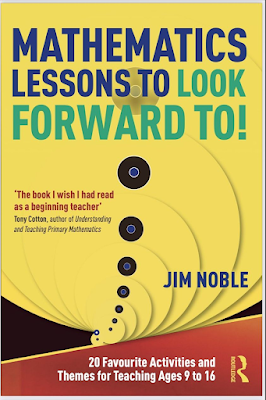
Mathematics Lessons to Look Forward To!

Jim's book is out!

Jim Noble is my friend and colleague in secondary. His classroom just a few metres from our Early Years playground, no doubt he's had to shut his door many times because of the racket we're making! I see him out there too. 

'If the world were a hundred people...'

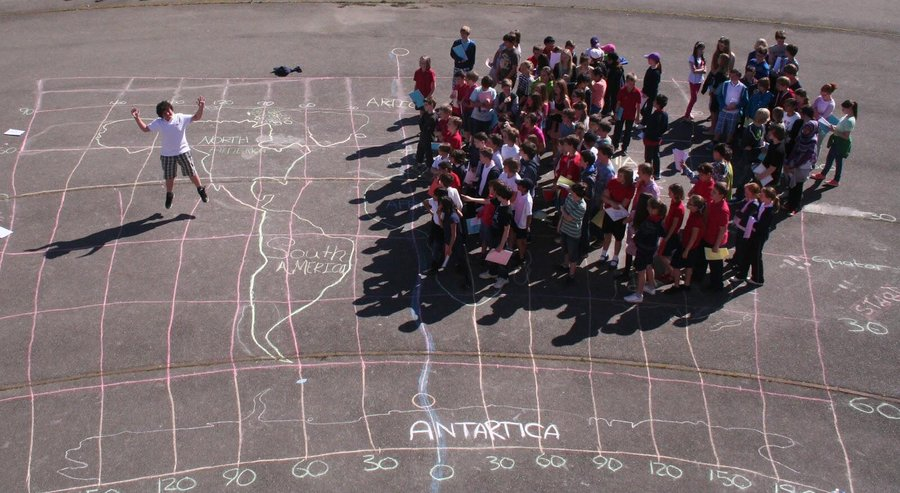
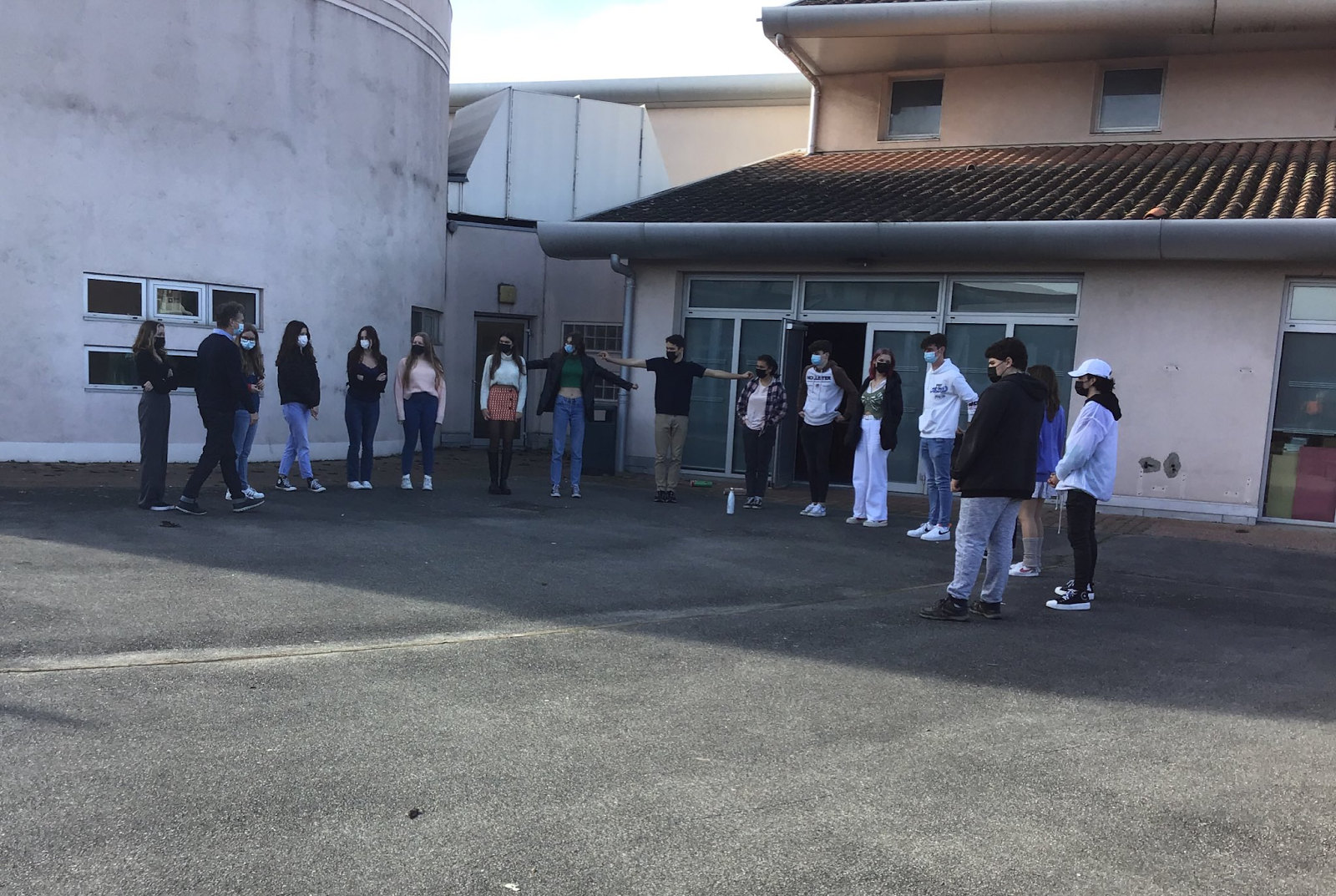
Human Loci: Creating a parabola

These are part of two of the lessons described in Jim's Mathematics Lessons to Look Forward To! The book details twenty lessons that Jim returns to, experiments with, hones and polishes. 

"Every time I revisit a topic for myself or in preparation for teaching or mostly during teaching, I always notice something I haven’t seen before and this is often pointed out by a student."

Jim is a great storyteller. He's often called on to be the one who puts important rites of passage in the life of the school into words: leaving speeches, introducing speakers and celebrations. He's always assured, natural, entertaining and considered in what he says. 

This book is the same. And Jim is letting us into the heart of his teaching here, there's a vulnerability, at times, a touch of self-doubt or self-mockery. In the process, he takes us back to what makes the lessons tick for him, why they became exciting and vital.

"Deep down I have convinced myself that the roots of ideas are an important part of them. I think the journey from first idea to activity is a really enjoyable, reflective part of the job."

His lessons are not always outdoors of course, but they are all out of the routine, they all stand out as being alive, practical where possible... experiences as well as lessons. And fun.

"It is fun. I have made no apology about this. I have found that I need this as much as students do. Something that adds variety to the global experience, something practical that gets students out of their seats and sometimes out of the classroom and something that makes us laugh a little is always welcome."

Reading a draft of the book, I was struck again by how we have so much in common in our outlook towards lessons. Is it that we've spent a lot of time together since 2004 when Jim came to the International School of Toulouse?

It's not just that we both photograph drain covers for their mathematical patterns, both enjoy seeing and making Islamic geometrical patterns, both value Seymore Pappert's seminal book Mindstorms...

Many - most! - of his twenty lessons do actually have their counterpart in the primary school.

We've both enjoyed 'Numbersearch' and these feature in the book:

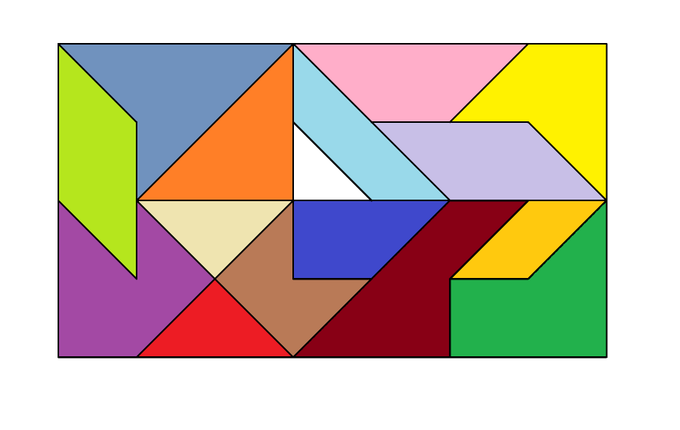
If the white triangle is 1, what other numbers can you see?

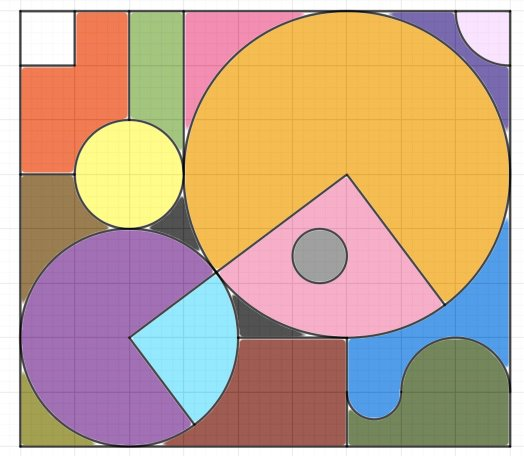
Jim got pi involved:

If the white square is one...

Like Jim in secondary, I love to get my primary students coding the path of a robot using Scratch:

“If I need to turn 5 equal turns that make a total of 360 then I need to turn 72 degrees”, which generalises to “for an n sided regular polygon, the turning angle is 360/n”. The thrill of making this conclusion is the same thrill as solving a puzzle. The word ‘discovery’ is much maligned and probably inappropriate as it implies a kind of wandering around until you find something then pick it up. This is much more mathematical in nature. You have a problem that needs solving, you have knowledge of the scenario at the ready and you put bits of this knowledge together to deduce new knowledge. Now that is doing mathematics.

Or using dynamic geometry:

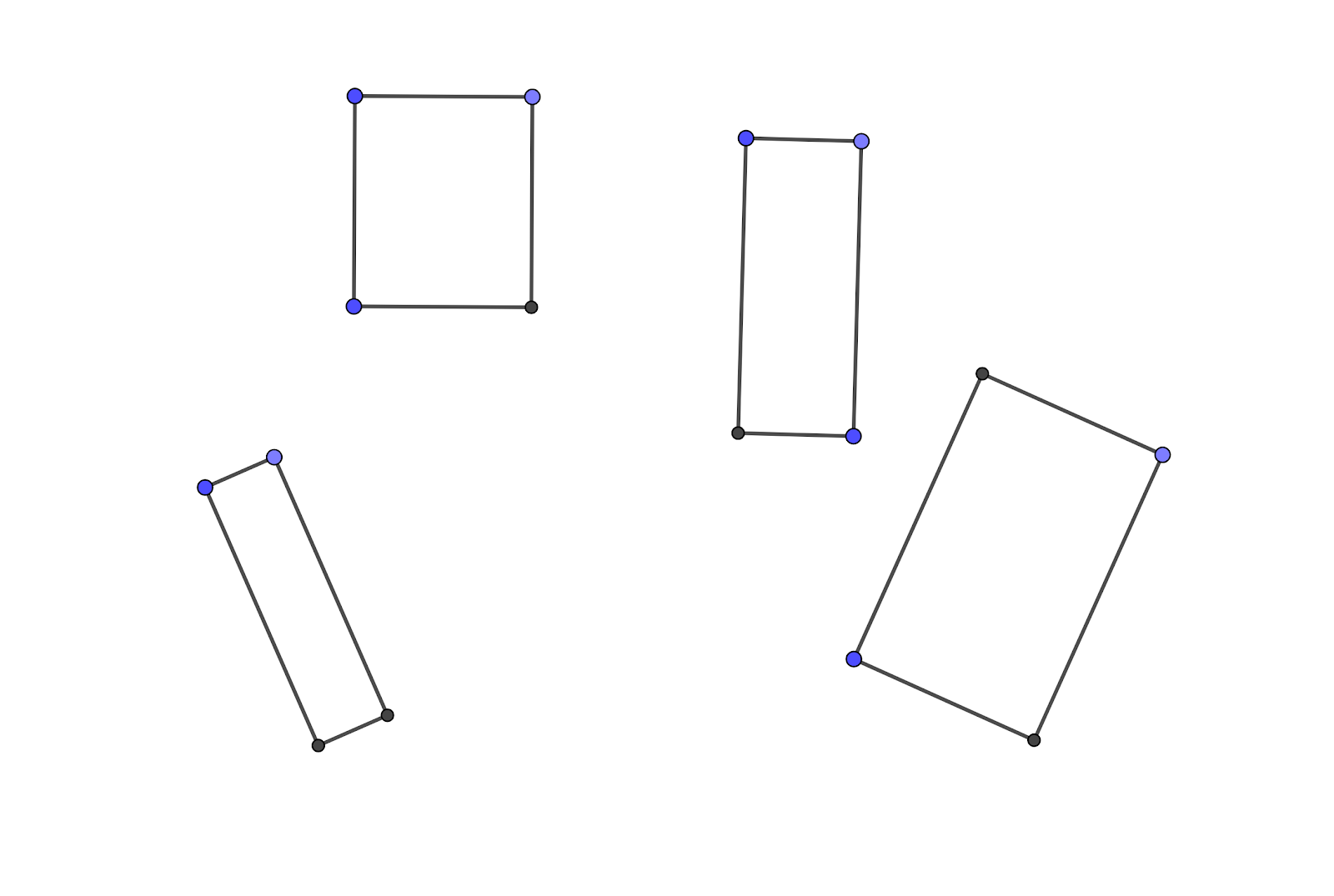
How would you construct this rectangle? The others? I really do recommend having a go here. It is really interesting to focus on the different ways it can be done and there are some surprising challenges hidden away in there.

In this activity, the constructed dynamic rectangle is, in a sense, every rectangle. Students get to explore the notion that each construction has a degree of freedom that is entirely defined by the elements that were used to construct it and the order in which they were used. It is a profound mathematical idea that goes beyond geometry into set theory and the anatomy of a variable. In many ways it is a much more natural way to see mathematics that a set of static images might be and really helps get our heads around the idea of generalisation. “Many things here can vary, but the following will always be true”

Jim asks the reader to have a go at parts the activities. Some of them I tried. I had a go for instance at constructing a rectangle four different ways using Geogebra. Each one has a different 'skeleton', the way it's constructed.

(I've come to the conclusion there's an infinite way of constructing a rectangle that can be stretched into any rectangle and these skeletons don't have to involve parallel sides, or perpendicular sides either.)

There is really no other book like this! Jim takes each lesson from his treasure chest of pedagogical subject knowledge and turns it every way in the light for us. Which different ways could the lesson go? How does it relate to key ideas in mathematics? How does it relate to our understanding of what it means to know? How does it engage students? What connections are there with other subjects?

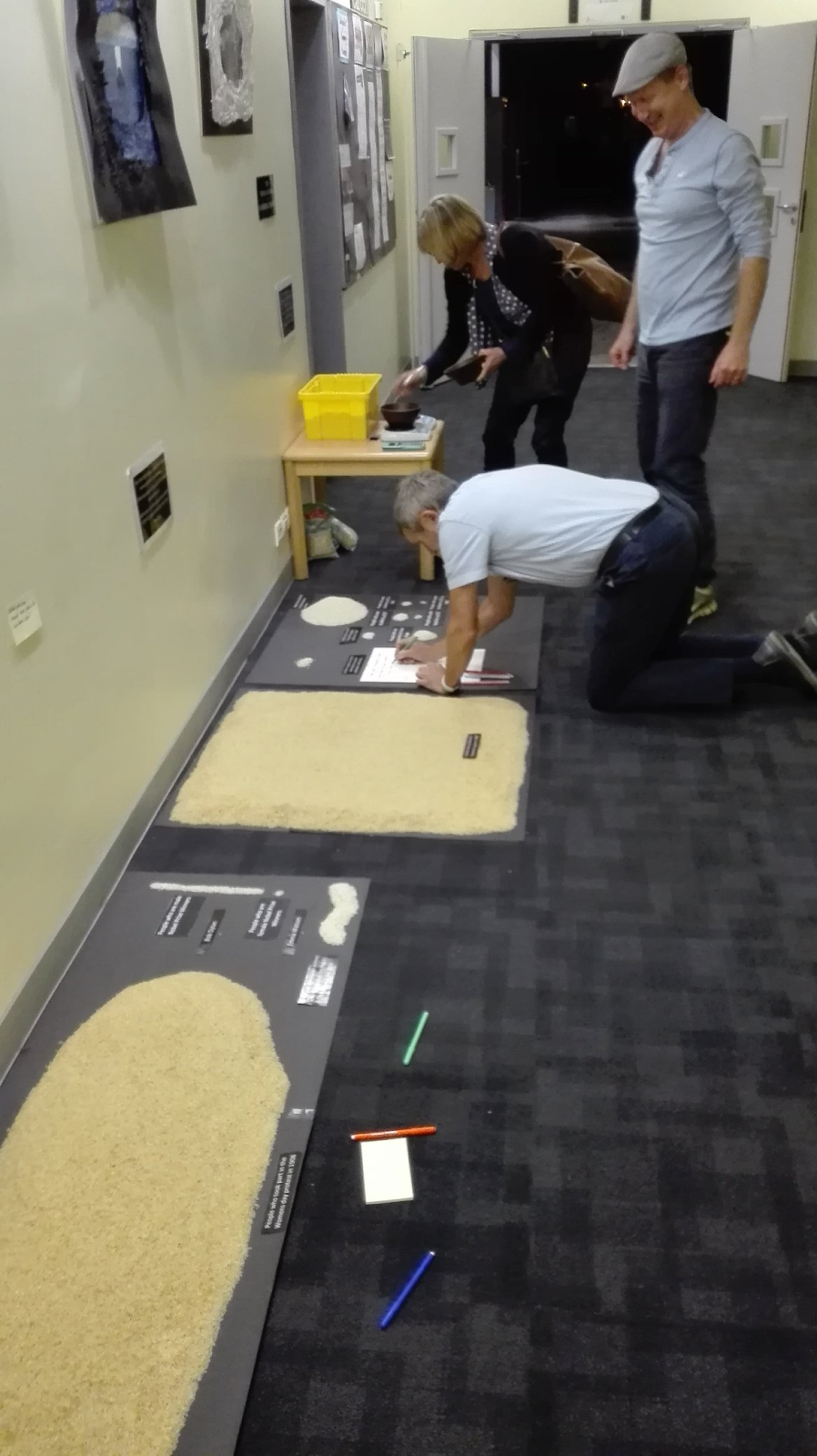
Jim showing piles of rice to Helen and Mike

You can tell I'm recommending it!

Great teacher, great book!


The lesson chapters:

 1 - What’s in the box

 2 - Cones

 3 - If the world was a village of 100 people

 4 - Goodness Gracious Great Piles of Rice

 5 - How do I love thee, let me count the ways

 6 - Number Searches

 7 - Human Loci

 8 - Statistics telling stories

 9 - Match Point

 10 - Prime Pictures

 11 - Population Growth

 12 - Starting from scratch

 13 - Indestructible

 14 - Dancing Quadratics

 15 - Hot Wheels

 16 - Maxbox

 17 - Dancing Vectors

 18 - Pleasure at the Fairground

 19 - Impossible Diagrams

 20 - Cubism

Saturday, 21 November 2020

fascinating water play

A short while back I was talking with Estelle and - I can't remember what the subject was - was it play schemas? - anyway, the subject of water play came up. It was something we both wanted to look into a little more.

We put water out, because it fascinates children. We think they must be learning if they're so active and so fascinated. Children will spend half an hour or more pouring and filling and emptying and much more. But what kinds of things are they investigating? What is interesting them in the water play?

I've been watching students play, asking myself what's going on, sometimes asking students but not getting much reply, and asking my colleagues.

If you haven't thought about this already, you might like to stop and think about what the fascination is with water play, before you've read other people's answers.

I thought I'd try Twitter too. I posted a photo of a student playing, and asked, 'What is it about playing with water that makes it so fascinating?'

Syreeta answered the call: 

We enter the world via the amniotic sac of fluid. Perhaps it reminds us of our beginning.

It's true, we are water creatures. Not only that, but we come from a very long line of water creatures.

Once I'd made clear that this wasn't a rhetorical question, answers came flowing in.

Kassia tweetedFilling and pouring seem to interest kids (and adults!) of all ages.

(Filling and emptying had been my first though too: satisfying to get to the end points - full and empty - and then to reverse the process. Maybe satisfying to so easily change the state of something into its opposite. Also, it doesn't have to be water: it can be rice or sand or wood pellets .)

Christopher repliedTrue. At least 40% of fun of home brewing is playing with water. Which, by the way, involves siphoning. Do these children have access to a siphon? Cuz if you're gonna make a tremendous mess, a siphon is a SUPER fascinating way to do it.

Must siphon!

Aston too was clear, adults have the same pleasure: It’s not just children- I’m 38 and been working on our rink in the back yard. Nothing more satisfying then watching the water spread out and freeze.


Jack wroteI think in part it hits a sweet spot between something that acts on its own and thus gives a sense of mystery and something that is controllable and thus reassuring. Also their is the slight drag of moving through it which is wonderful tactile feedback from the world.

The tactile feedback links in with what Steph had said: it's a sensory experience in a way that most of the day isn't. Estelle's impression too, putting her hands into the water, was about the sense of touch: how we felt the cold of the water entering it, and the warmth coming out.

David also commented on the meeting of opposites in water: 

Maybe it’s because water is so paradoxical:

You can see it’s there, but you can see *through* it. You can feel it, but not grasp it. You can make mess with it, but the mess disappears. You can carry it, but it can carry things too.

Michael too saw an oppositionIt is solid enough we can shape and change it but only for a moment, sending us back over and over again to try again.
Also it makes really satisfying sploosh sounds.

Westley thoughtIt's magical, like fire. We can control it but it also has a life of its own.

Justin also had a word about fire: It burns less than fire.
Face with tears of joy
Watching students play should provide some of the answers. One of the things that seemed to fascinate this student, was how you could tilt the container just a little and the water would swill to the other end and start pouring. Shake it, and it comes out in all sorts of ways! 

He spent about 40 minutes with this water. He liked the bubbles too. Sometimes, the bubbles made a kind of noise. Here's Estelle listening to it.

When I got home, I showed Pam some photos from the day, and asked her too what the fascination is in water play. She had a lot to say:

Water is just the most fantastic material. The way it has so many interesting properties, shapes, colours. The way the light passes through it. The way it twists as you’re pouring it. It doesn’t just go from one place to another. When you pour it, it catches the light, it sometimes has a smooth bent surface, it cascades, it’s in drops, it might fall in zigzags through the air.

You can hold it, but you can’t hold it. You can scoop it, but you can’t control it. If you put your hand in to pick something up, it’s not where you think it will be.

There’s something mysterious about it.

If it’s in a transparent container, it’s different according to what side you put it into. There’s nothing boring about water.

And then there’s bubbles! Even in water without squeezy in, there’s a bubble when you drop something in.

It’s funny as well. You splash it, and it goes on your clothes but there’s no harm – it will dry out. Maybe a bit of water on the floor. But it’s just fun.

You’ve got something floating and then it sinks, you can experiment with it just by playing and having a laugh. It’s fun.

Meanwhile, more tweet answers were washing in.

Dan suggestedI wonder if asking why might not get to the heart of what it's *like* to play with water? What’s it like to ... might get closer to the experience?

Amanda wroteIt's the one substance besides air that we have a lot of regular contact with, but it acts differently than air, in very interesting ways. When we go to the beach, it seems like access to a totally different world. It's incredibly powerful.

We don't think much about air because for the most part it's not visible or tangible to us. But water does cool stuff!

Poly tweetedI am totally with this little one: watching water move is fascinating! Might be interested in this book by a marine biologist, all about our fascination with all things water and why it makes us happy.


I am interested! It seems to me that the exploration of water, the experimenting and contemplating is carried by a comfort with water, the pleasure in being close to it. While we're enjoying water, waves of learning splash over us too!

maggie and milly and molly and may
went down to the beach(to play one day)

and maggie discovered a shell that sang
so sweetly she couldn't remember her troubles,and

milly befriended a stranded star
whose rays five languid fingers were;

and molly was chased by a horrible thing
which raced sideways while blowing bubbles:and

may came home with a smooth round stone
as small as a world and as large as alone.

For whatever we lose(like a you or a me)
it's always ourselves we find in the sea

e.e. cummings

MB talked about our attraction to water: And as well as all it does, it’s really good for us to touch the elements of nature. Water, sand, Earth, wood, pebbles etc. Think we are intrinsically drawn to it.

Sarah also spoke about the emotional power of water: When my son was born,he was always unsettled and barely slept. He didn't sleep through the night for four years. Water was the one thing that calmed him.He would immediately relax and was soothed. He's now 19 and still loves water. Water can be restorative as well as fascinating

MariaIt's splishy, splashy fun!

"From one million miles away our planet resembles a small blue marble; from one hundred million miles it’s a tiny, pale blue dot. “How inappropriate to call this planet Earth when it is quite clearly Ocean” Arthur C. Clarke, quoted by Nicole

All this has of course made me only more keen to have water play as a big part of our provision for our 3, 4 and 5 year olds. This week we've had red strawberry-scented water, (a bit too) blue peppermint-scented water


 and yellow lemon-scented water.

It's also made me want to watch closely, an see what it is that children are attending too, and experimenting with.